
AI Prompt Statistics 2026: How Marketers Are Really Using Generative AI
By GPT Prompt Maker Research Team — Based on 2026 industry data across 12+ sources. Last updated October 2026.
The headline numbers are striking. By Q1 2026, 87% of marketing professionals reported using generative AI in at least one recurring workflow — a 36-percentage-point jump from the 51% adoption rate in Q1 2024. But the data tells a more complicated story: one of massive adoption, operational friction, and a widening gap between leaders and laggards.
1. The Adoption Reality: Widespread but Shallow
Expand the picture to general organizational usage and the number climbs to 91% of marketers actively using these tools daily. Enterprise adoption is effectively saturated — organizations with 250+ marketers report a 94% active deployment rate. Even small businesses have caught up: 87% of U.S. small businesses now deploy AI systems, up from just 26% in 2023.
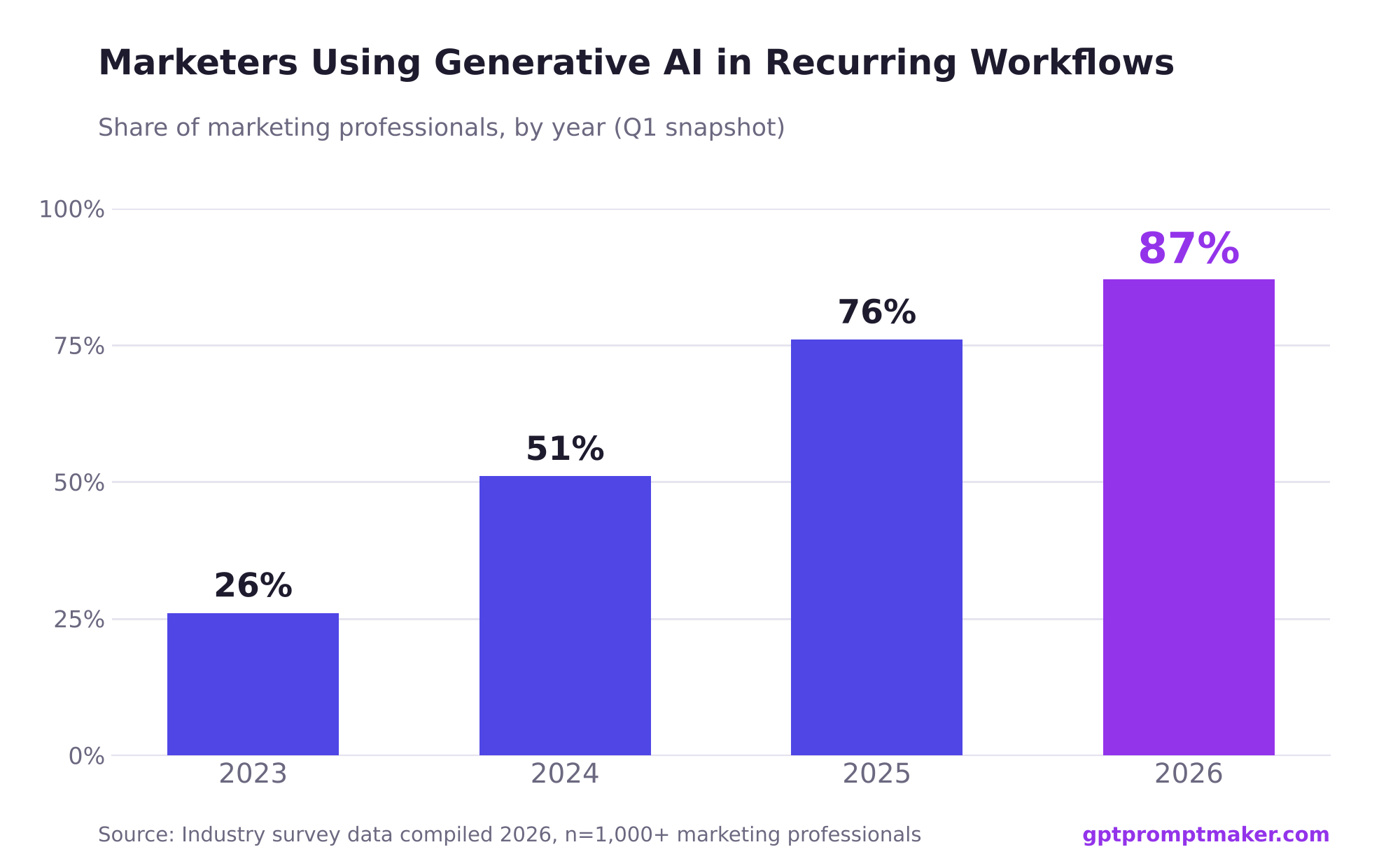 Chart 1: AI adoption in marketing workflows, 2024 vs Q1 2026
Despite near-universal adoption, AI tools are only applied to 15.12% of total available marketing activities within the average organization. Surface adoption is full. Deep integration is not.
The gap between access and integration is the defining characteristic of AI marketing in 2026. Only 6–30% of organizations have achieved full lifecycle integration. The majority remain stuck: 40% describe usage as purely experimental, 46% classify it as isolated pilot programs. Only 17% have reached the "Transformation" phase — where job roles and workflows are actively redesigned around AI capabilities.
2. Prompt Engineering: From Hobby to Profession
What started as informal trial-and-error has matured into a structured, highly compensated discipline. The global prompt engineering market was valued at approximately $505 million in 2025 and is projected to reach $672 million by end of 2026, expanding at a CAGR of 33.27%. By 2034, the market is forecast to approach $6.95 billion.
In 2026, enterprise marketing systems have moved well beyond basic text commands. The dominant techniques now include few-shot prompting, Chain-of-Thought (CoT), Tree-of-Thought (ToT), and Automatic Prompt Optimization (APO) — systems that generate hundreds of prompt variants, evaluate them against success metrics, and refine autonomously. As prompt infrastructure becomes foundational, vulnerabilities have become boardroom-level: prompt injection attacks surged 340% in 2026, yet 63% of organizations operate without any generative AI policy.
3. Budget Realities: Explosive Tool Spend, Flat Headroom
The global AI marketing market grew from $47 billion in 2025 to $57.99 billion in 2026. CMOs are allocating an average of 15.3% of their marketing budgets to AI initiatives — but total budgets remain flat at 7.8% of company revenue. That means AI investment is coming entirely from reallocation: defunding legacy software, traditional media, and agency retainers.
56% of CMOs say they lack the budget to execute their 2026 strategies. The median mid-market spend on generative marketing tools jumped from $1,200/month in Q1 2025 to $3,400/month in Q1 2026 — a 183% year-over-year increase.
4. Productivity Gains and the ROI Paradox
Marketers save an average of 6.1 hours per week, with heavy users recovering 11–13 hours. Organizations publish 42% more content per month compared to pre-AI baselines. Where financial metrics are properly captured, the returns are compelling:
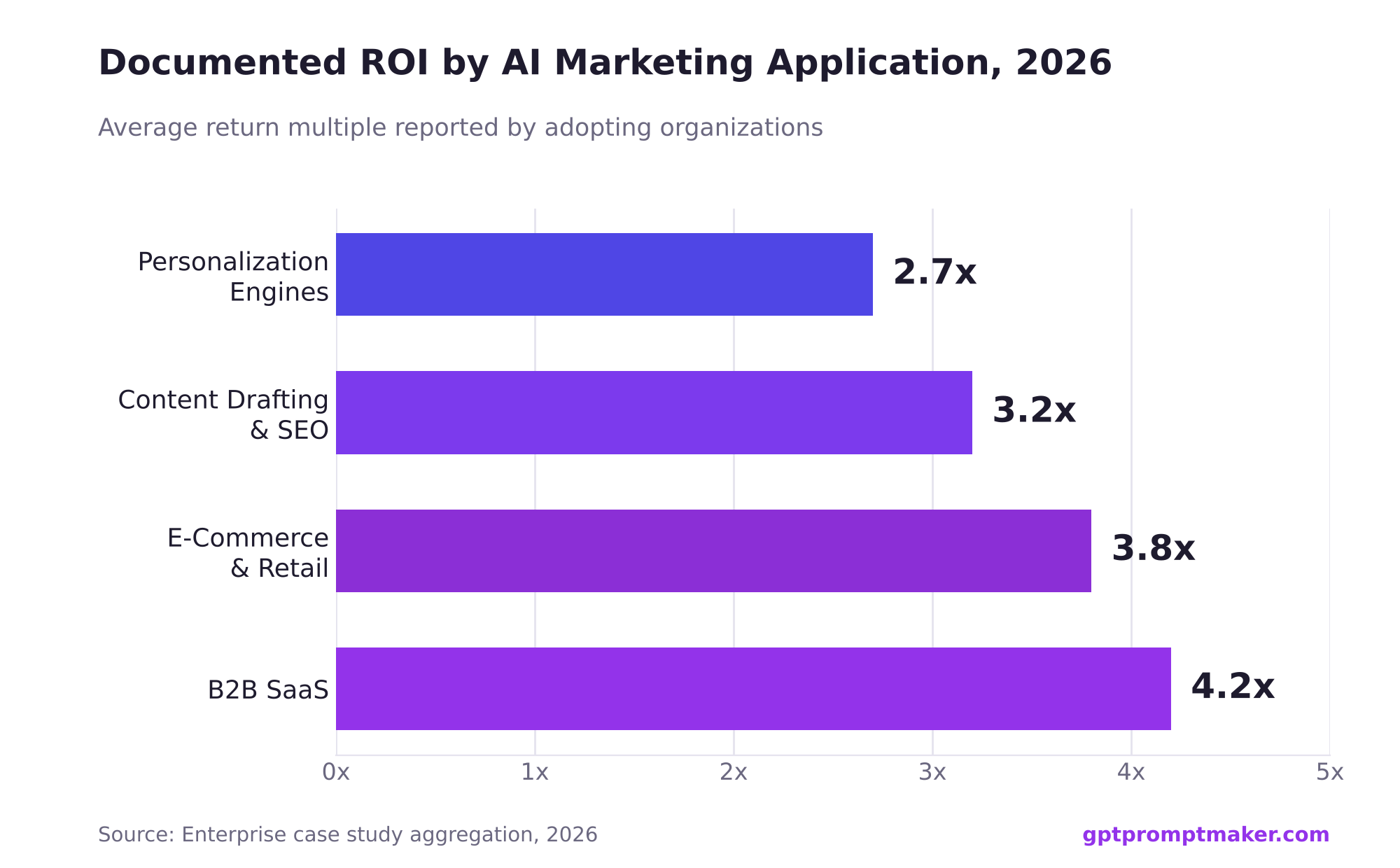 Chart 2: Documented ROI by AI marketing application, 2026
Yet 59% of marketers cannot prove financial ROI to executive leadership — up from 49% in 2025. The problem is measurement, not performance. C-suite leaders have stopped accepting "hours saved" as a valid metric; they want pipeline acceleration and revenue impact.
5. AI Is Disrupting How People Search — and How They Find You
By April 2025, 74.2% of newly created web pages contained some form of AI-generated text. This saturation is pushing search engines toward generative overviews — and rewriting the rules of discoverability. Answer Engine Optimization (AEO) has emerged as a distinct discipline: structuring content so that large language models parse and cite your brand as a primary source.
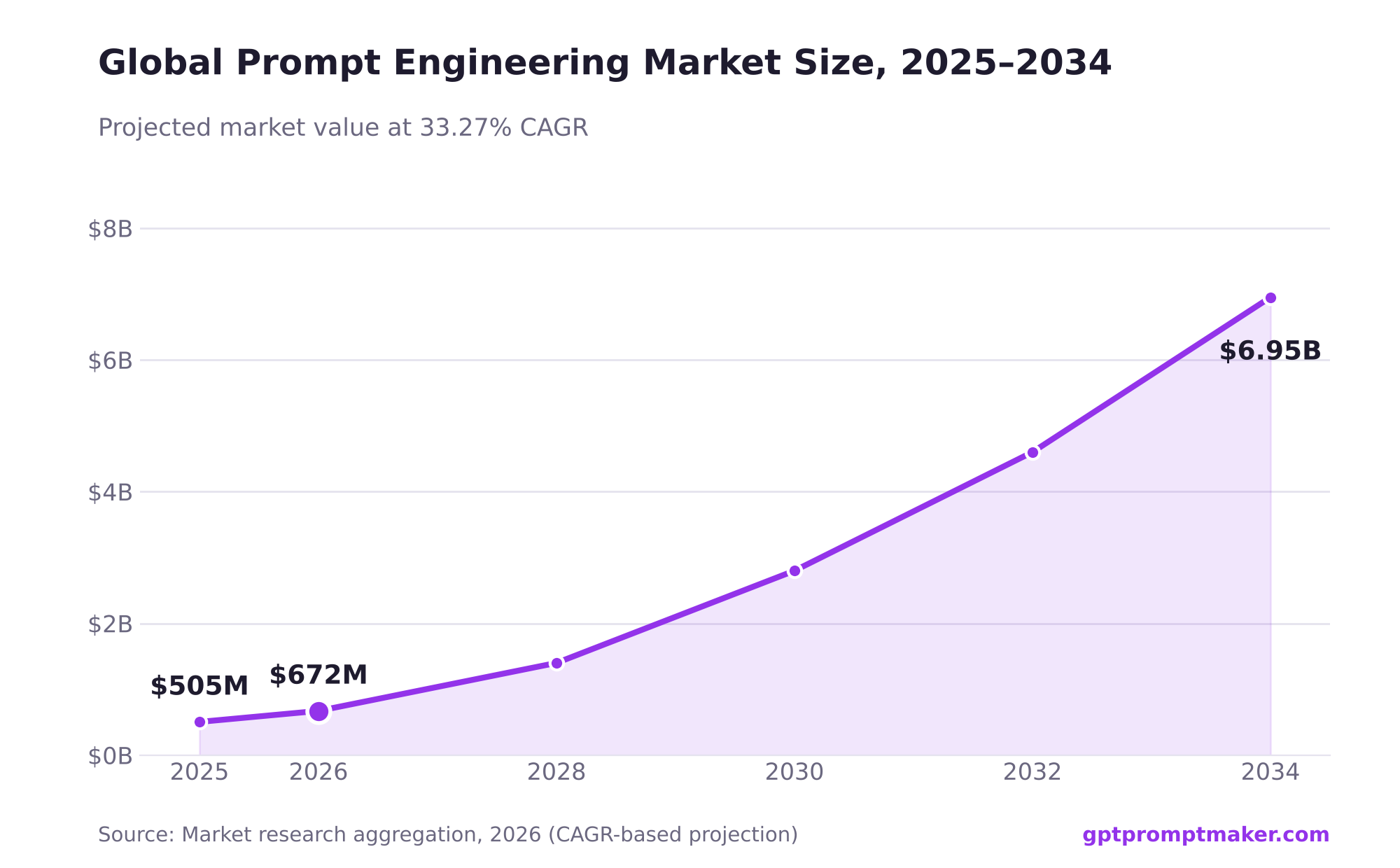 Chart 3: Global AI marketing market growth, 2025–2028 projection
Key data points: 19% of Google search results now feature AI-generated content in the response window. A page ranking first in traditional search is 25% more likely to appear in generative overviews. At the same time, 50% of U.S. consumers say they prefer to buy from brands that do not use AI in consumer-facing content — making authenticity and human credibility critical differentiators.
6. The Human Bottleneck: Skills Are the Real Constraint
The biggest barrier to scaling AI in 2026 is not technology — it is people. Only 17% of marketing professionals report receiving comprehensive, job-specific training on the tools they use daily. 68% say their employer provides zero internal training. Job listings requiring prompt engineering proficiency have increased by 71%, and practitioners with orchestration skills earn 20–35% more than traditional marketers. 53% of marketers believe AI will eliminate more marketing jobs than it creates over the next three years.
7. The Next Phase: Agentic AI Frameworks
The defining transition of late 2026 is from prompt-based chat interfaces to autonomous agentic systems. 40% of large enterprises are now scaling autonomous agents, 34% of marketing teams run at least one agent in production, and 81% of marketing leaders are actively piloting agentic workflows. The prerequisite is data architecture — organizations ignoring structural data gaps are 45% less likely to successfully implement agentic systems.
Build Better AI Prompts for Your Marketing
500+ CO-STAR, RISEN & CRAFT templates. Works with ChatGPT, Claude, Gemini & Midjourney. Free to start.
Browse 500+ Prompts Free →